

The
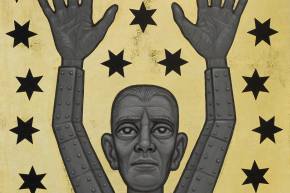
exhibition traces the drawings of sculptor Zbyněk Sekal (1923–1998), from his
early figural studies to works created while in exile in Vienna, presenting
drawing as an autonomous space of thought and existential experience. Alongside
works from the collections of the National Gallery in Prague, the exhibition
also introduces, for the first time, works on paper from the artist’s estate,
bequeathed to the institution by the artist’s widow, Christine Sekal, many of
which have never before been put on public display.
Drawing
accompanied Zbyněk Sekal throughout his life. From raw post-war works and
expressive portraits shaped by his experience of the Mauthausen concentration
camp, through Surrealist experiments and imaginatively charged compositions
marked by existential unease, to late drawings capturing the organic structures
of plant imprints, the recurring theme is that of the individual confronting
transformation, uncertainty, and the search for identity.
The
concept of the exhibition is symbolically anchored in the motif of the blue
flower from the unfinished novel by the German Romantic poet Novalis. This emblem of the longing for knowledge and
the unattainable union with the absolute serves here as a metaphor for Sekal’s
drawing itself. Just as Novalis’s wanderer seeks a deeper meaning of
life through the image of the blue flower, so Sekal’s drawing becomes an
expression of introspection, a trace of his ongoing interrogation of human
existence and its place in the world.
Curator:
Adriana Šmejkalová
Exhibition
catalogue: Adriana Šmejkalová, Zbyněk
Sekal, Drawings and tempera, exhibition catalogue Zbyněk Sekal – Blue
Flower, National Gallery in Prague, September 2026
Venue:
The Graphic Arts Cabinet at 2nd floor of the Trade Fair Palace as part of
the pernament exhibition 1939–2021: The End of the
Black-and-White Era
Zbyněk Sekal’s Studio, an interpretation of the artist’s Vienna studio, Respirium, 2nd floor of the Trade Fair Palace
Zbyněk Sekal’s Studio, an interpretation of the artist’s Vienna studio, Respirium, 2nd floor of the Trade Fair Palace


1—1 / 6